

There are different letters when you start to look through listings. VVS, VS, SI, Eye clean, and others. Professionals know this, but many gem enthusiasts might not know what they mean, and it's important to know what clarity is, especially before you pay.
A clarity grade is what's underneath your stone, whether it be the type of stone, the size, how it's positioned or inclusions, and how much a cutter can get out of this. Clean and rough stones will be higher-priced, as you usually get more finished stone from this.
What is clarity in facet rough gemstones?
Clarity means what you can see inside, including cracks, inclusions, and blemishes, understanding what you can get from the stone.
Most cut and polished stones are graded in different systems, but facet roughs are different, because they're based on trade experience rather than just a certificate from a lab.
You will see the following inclusions in rough gemstones:
- Needle crystals that go through stone
- Feather fractures or planes
- Clouds that make a hazy patch
- Crystal inclusions trapped in the stone
- Tubular channels that are left over from crystal growth
- Uneven color distributions, common in tourmaline or sapphire.
The different letters basically telling you how many inclusions there are, and what cutting must be done because of such inclusions.
Why clarity grading matters more for rough than cut stones
Clarity is way more important in rough stones than finished because most cutters can hide imperfections through orientation, whereas a rough stone is based on what's sitting there.
Faceted gems hide the inclusions and use the ideal angle to keep problematic parts out of there. Rough stones, however, are buying potential, rather than what you're getting as a finished product. Included stones are far more limited. You might choose smaller stones if there're fewer feathers, or accept ones with a cloud that sits at an angle to hide. With rough stones, the yield drops, because you need to cut out the bad parts.
So a 12-carat stone may get you 4 carats of facets, even less if there's a feather or a needle inclusion, because you need to cut around this.
VVS: Very Very Slightly Included
VVS is what commercial-grade stones are made of, because it's hard to find inclusions even with 10x loupe magnification, and will be invisible with the naked eye.
Precious stones and pieces with maximum yield come from this.
VVS rough looks like this:
- Pinpoint-sized inclusions, or needles that are super fine
- No fractures, feather, or cleavage
- The color is consistent throughout, or maybe subtle if it's facing away from where the stone will sit.
- Appears transparent
VVS is important for premium stones that need some flexibility. This is because the table facet can be placed almost anywhere, so you'll get a yield.
If you're an experienced cutter or a dealer looking for premium inventory, get a VVS quality stone.
VS: Very Slightly Included
This is the more common stone that cutters buy, because they tend to be cheaper for the quality you get. Most inclusions are minor and visible under magnification, but can be oriented for finished gems.
They usually look like this:
- Inclusions are present in a loupe but are subtle
- Might have crystals, needles, or small fractures, but not through cutting zones
- No major fractures or cleavage planes
- Eye-clean in the light
- Easy to see orientation
Amethyst, citrine, apatite, and semi-precious stones benefit from this type of clarity. If you're looking to stock up, our wholesale rough gemstones collection carries a wide range of VS and eye-clean options across popular species.
SI: Slightly Included
SI will have more noticeable inclusions with magnification, and sometimes the naked eye. It requires some skill to cut it well, but will be cheaper.
These are best for cabochons, practicing, and large projects, or a species that tends to have fractures.
They look like this:
- Visible inclusions under a loupe and naked eye
- Noticeable clouds, color variants, or crystals trapped
- Orientation tends to be tighter, so have to plan inclusions
- Some SI might come out eye-clean based on orientations
- Large risk of fracture during cutting if there's a feather by girdle
- Finished stone weight tends to be near rough weight
SI doesn't mean the stone is a lost cause, because a lot of emeralds tend to fit into this category. Beginners as well can benefit from this, especially when practicing cabochon cuts.
Eye Clean: What This Term Actually Means
Eye clean means that you won't see the problems without magnification, and disappear when you hold the stone about a foot away. This is good for buyers who want nice gems, without paying the premium price.
The key thing here is that those inclusions won't be seen by the eye, and only under a loupe. They also do take some skill to be cut so the facets are table clean.
Eye-clean tends to sit between VS and VVS, with dealers using them interchangeably. The key thing is people go for eye clean when their focus is the finished stone.
Loupe Clean: The Top Tier
Loupe clean means that you won't see inclusions even under magnification, and looks utterly flawless.
It has the following characteristics:
- Zero inclusions
- Completely transparent
- Can be orientated however the cutter wants
- Huge yields
- Very expensive in terms of price per carat
Loupe clean is not very common, especially in older species like rubies, Columbian emeralds, and alexandrite. Amethyst and citrine are a little easier to find.
| Grade | Inclusion Visibility | Yield | Price | Cutting Impact | Best For |
|---|---|---|---|---|---|
| Loupe-clean | None | 85–95% | Premium | No impact | Collector pieces |
| VVS | Barely visible | 75–85% | High | Minimal impact | Fine jewelry, precious stones |
| VS | Visible under loupe, but small | 60–75% | Mid-high | Minor | Facet projects or semi-precious stones |
| Eye-clean | None to naked eye, sometimes on loupe | 60–80% | Mid | Minimal with proper orientation | Jewelry pieces focused on appearance |
| SI | Visible both in loupe and naked eye | 40–60% | Cheaper costs | Limits orientation | Good for practice, cabochons, included gems |
Ready to Find Premium Faceting Rough?
Browse natural facet-grade rough gemstones selected for clarity, cutting potential, and exceptional value. Whether you're a beginner or professional lapidary, you'll find quality stones for your next project.
Shop Faceting Rough Explore All Rough GemsWhich Clarity Grade to Buy for Each Gemstone Type
Gems get different clarity treatments and are suggested buys based on the type of stone they are. Here's what you should know when choosing to buy a gemstone type.
Naturally Included Species: Lower Grades Are Normal
There are a few species where heavy inclusions are normal, and are okay with being a little rough:
- Emeralds have "Jardin" inclusions, which are considered excellent among specialists, since eye-clean is rare. Read our full emerald gemstone buying guide to understand what to look for when purchasing emerald rough.
- Ruby is also hard to find with a clarity above VS.
- Alexandrite is heavily included, and it's rare to find eye-clean types.
Typically Clean Species: Aim for VS or Better
Here are the species you should buy at higher clarity:
- Aquamarine, because eye-clean or better looks good. SI is considered low quality.
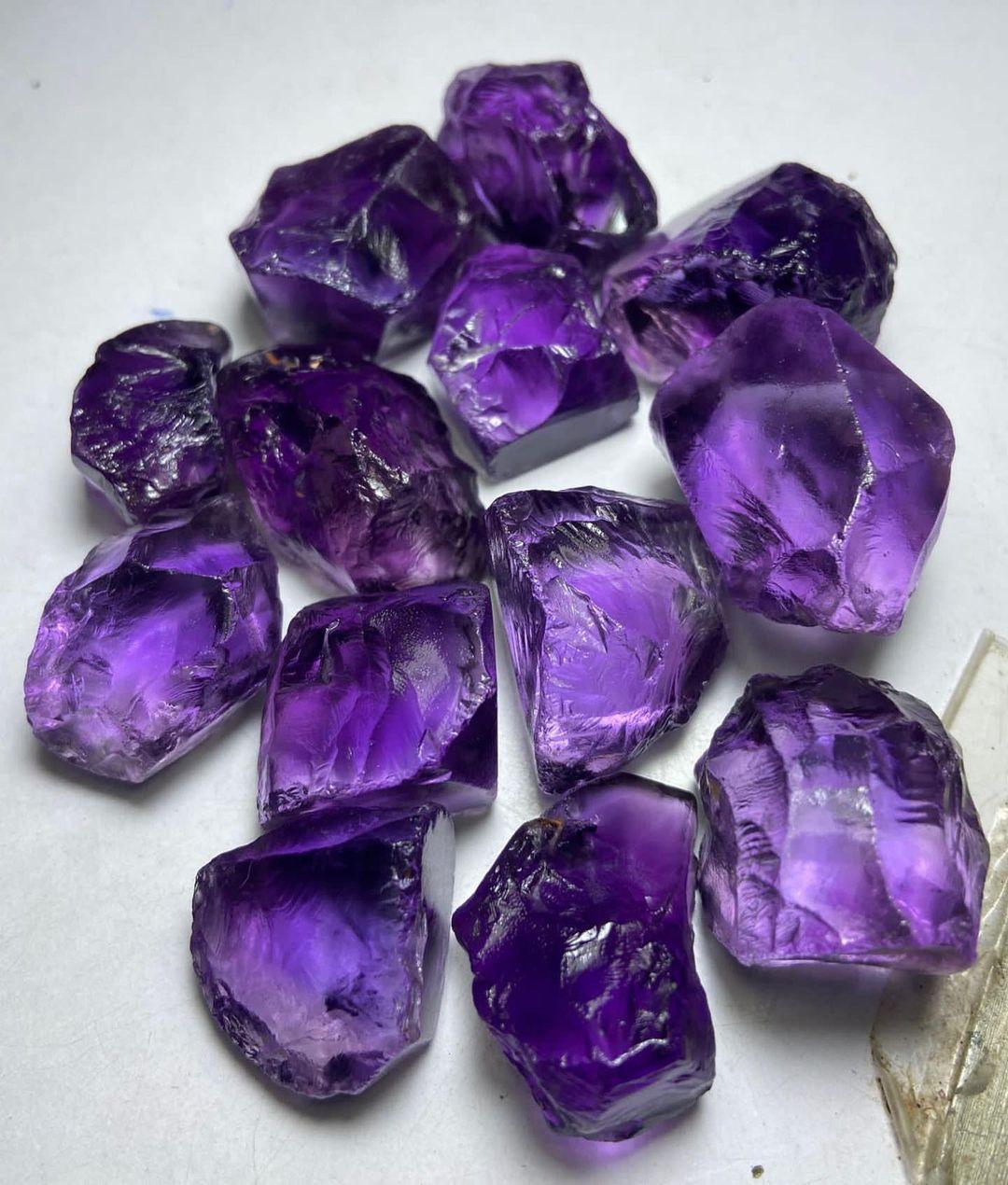
- Amethyst is easy to find as VVS or loupe clean, so don't settle for SI unless you're trying to practice. Our 500 gram facet grade rough amethyst is a great starting point for cutters who want high-clarity material at a practical quantity.
- Apatite should be eye clean at least.
- Garnet has a variety of clarity amongst the stone, so try to go for ones that are cleaner, unless you want the horsetail inclusion demantoid has.
- Chrome diopside should be eye-clean since the dark stone hides inclusions.
Variable Species: Check Before You Buy
Tourmaline varies by color and origins. Some Afghan ones tend to be clean, but paraiba is included, so look at descriptions.
Sapphire is also varying, with the Ceylon and Kashmir being very clean compared to others. Go for VS when buying sapphire. Our 230 carat rough facet grade blue sapphire lot is a good example of VS-quality material with strong cutting potential.
How Clarity Grades Affect Price Per Carat
Clarity determines the facet price per carat, but it varies with it getting steeper as you get higher.
Here's a chart of clarity and what to find when buying wholesale facet rough stones:
| Clarity Grade | Price vs SI Baseline | Notes |
|---|---|---|
| SI | At baseline | Budget and practice material |
| Eye-clean | 1.5–2.5x | Easy to find, very practical |
| VS | 2–4x | Very popular |
| VVS | 4–8x | Premium |
| Loupe-clean | 8–20x | Rare |
This all varies within the species, especially for certain stones like emeralds. Many that are loupe-clean may cost less than SI stones, especially if the Jardins look good.
How to Check Clarity in Facet Rough Yourself Before Buying
There is a way to check stones before you buy. It's simple to do.
Tools:
- 10x loupe. Spend the money on this.
- A fiber-optic or LED penlight.
- Diffused overhead light.
The Four-Position Check
Do the following:
- Hold the stone in front of a light source and go for backlight, to look for transparency and fractures.
- Hold it oblique to see if there's fine needles or feathers when the light catches the sides.
- Hold the stone against a dark background with the light held at your shoulder to find blemishes and surface inclusions.
- Hold at the naked eye and look to see if it's eye-clean.
Shop Rough Gemstones with Confidence
Explore our collection of natural rough gemstones with detailed photos, transparent descriptions, and facet-grade options for lapidary artists, collectors, and gemstone professionals.
Browse Faceting Rough Explore All Rough GemsBuying Facet Rough Online
Clarity is important, especially if you're not holding the stone. Here at Gemstone Insider, we give you the lowdown of the clarity on every listing and what to expect. Before you buy, it's also worth knowing how to tell natural stones apart from synthetics — our guide on real vs fake gemstones covers the key tests and red flags to watch for.
You get:
- Multiple photos of the stone at different angles
- Close-up shots of the inside
- The clarity grade, not some vague phrase on quality
- Loupe and video footage
- A return policy if the gem doesn't match specifications
We make sure every listing has a clear description, which you can browse at length. Browse our full range of facet grade rough gemstones for lapidary, including rough crystals and wholesale rough lots.
Frequently Asked Questions
What does VVS mean in facet rough gemstones?
VVS is very very slightly included, which means that the stone is rough and there are present inclusions. It gives you more liberty to cut in a way to get the most yield, which is why it's premium.
What is the difference between eye clean and loupe clean?
Related Articles
Explore more gemstone guides to help you buy, cut, and understand rough stones better.
-
Sapphire Buying Guide: September Birthstone Meanings, History & Clarity Tips
Learn what clarity grades to look for in sapphire rough, including why Ceylon and Kashmir stones tend to run cleaner than other origins.
-
Garnet Buying Guide: January Birthstone Meaning, History & Clarity Considerations
Garnet clarity varies widely by variety — find out which types to buy clean and which inclusions, like demantoid's horsetail, are actually desirable.
-
Citrine Gemstone Guide: November Birthstone Known for Clarity and Brilliance
Citrine is one of the easiest stones to find at VVS or loupe-clean quality — understand what to expect when buying citrine rough for faceting.
-
Tourmaline Buying Guide: October Birthstone Meanings, History & Clarity by Origin
Tourmaline clarity varies dramatically by color and origin — learn why Afghan material tends to run clean while paraiba is typically more included.




0 comments